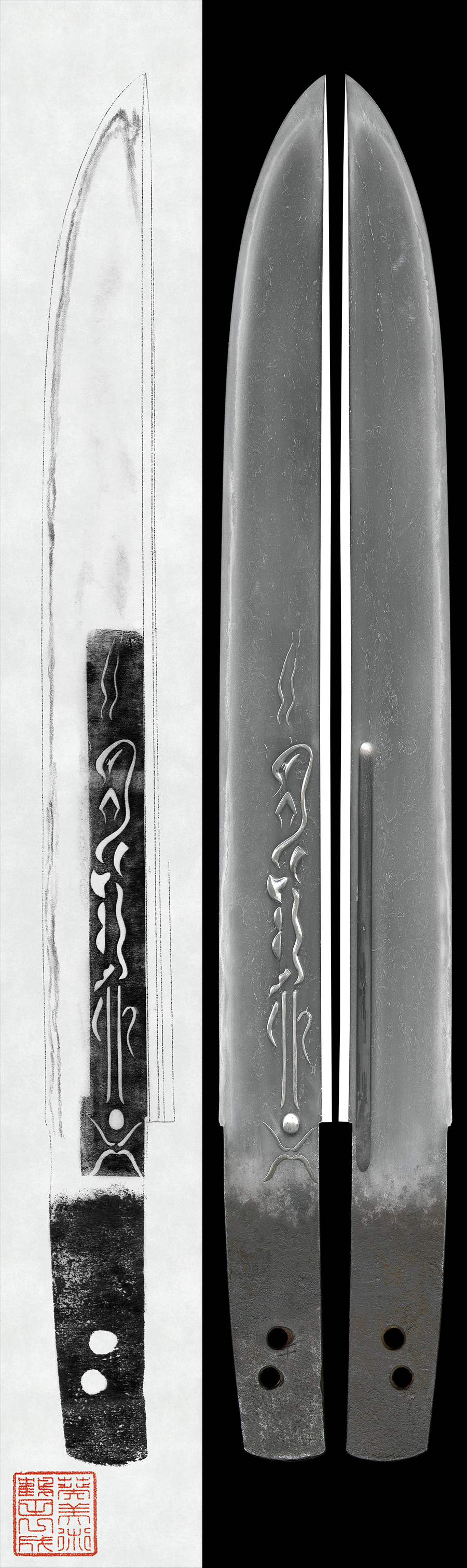
Mumei (Yamamura) — Tantō
Yamamura school (Echigo)
Smith: Mumei (attributed to Yamamura)
Mumei (unsigned); attributed to the Yamamura school
Kotō — Nanbokucho period, c. Ōan era (1368)
Measurements
Nagasa
26.3 cm (10.35 in)
Sori
0.0 cm
Motohaba
2.72 cm (1.07 in)
Kasane
0.53 cm (0.20 in)
Blade Characteristics
Hamon
Nie-deki suguha with ko-ashi; long kinsuji in the ha
Hada
Ko-itame hadadachi with jinie; utsuri appears
Bōshi
Round, yakizume style
Nakago Notes
Short nakago, mitsumune style; 2 mekugi-ana; carving of a ken (sword) and dragon on the omote, bo-hi groove on the ura
Mountings & Fittings
Koshirae Notes
Stored in shirasaya; silver single habaki
Papers & Documentation
Appraisal Status
NBTHK Hozon Token
NBTHK / NTHK Notes
NBTHK Hozon Token; ranked Jōjō Saku. The Echigo Yamamura school began at the end of the Nanbokucho period; the paper attributes the work simply to 'Yamamura'. Aoi Art estimation paper.
Provenance
Listed by Aoi Art (aoijapan.com), Ordering No. AS26396
About This Object
A wide, mitsumune-style tantō of the Nanbokucho period attributed to the Echigo Yamamura school. The Yamamura tradition is said to descend from students of Nobukuni, with Yamamura Masanobu as its head. The blade features beautiful jigane, nie-deki suguha hamon, and long kinsuji, characteristic of late classical tantō construction.